




Food safety when handling resin and food
What you need to know:
At CM Design s.r.o., I believe that beauty and functionality go hand in hand. My products made from epoxy resin and wood – such as wooden serving boards with epoxy resin, wood cutting boards, and decorative bowls – are carefully crafted to enhance your home. Of course, I pay special attention to ensuring that they are safe for serving food, exactly as they are intended to be used.
Important food safety notice:
The epoxy resin I use is officially certified for food contact according to strict European standards. It complies with Regulation (EC) No. 1935/2004 and provides not only guaranteed safety but also aesthetic and functional value. This means that it is completely safe for use in kitchen environments – from wooden serving boards with epoxy resin, countertops and decorative wooden bowls to other products that come into contact with food. However, I strongly recommend using the resin side of the wooden serving board with epoxy resin only for serving food, and the wooden side without resin for direct food preparation and cutting. This helps ensure the longevity and beauty of the resin while also protecting the safety of your food.
Serving boards and cutting boards – beautiful and functional:
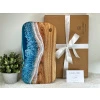
Wooden serving boards with epoxy resin and wood cutting boards serve not only as beautiful kitchen decorations but also as practical kitchen tools. The resin side of the board is ideal for presenting and serving food, while the wooden side is designed for cutting and preparing ingredients.
Food safety guidelines:
- The resin surface is safe only for occasional contact: The resin surface is great for serving light snacks or displaying food on a wooden serving board with epoxy resin, but it is not intended for long-term contact with food or for cutting.
- Use the wooden side for cutting: To maintain the quality and beauty of the resin, always cut food on the wooden side of the board where there is no resin. This ensures that both your food and your wood cutting board remain in excellent condition for many years.
Stylish serving:
- Present with elegance: The resin side improves the presentation of cheeses, fruits and appetizers, making a wooden serving board with epoxy resin perfect for entertaining and stylish serving.
- Protect the resin surface: If you want to keep the resin looking truly 100% fresh, when serving moist foods such as cheese or other appetizers I recommend using crumpled baking paper. This protects the resin surface while also adding texture and visual appeal to your presentation.
Epoxy resin and wooden bowls
Designed for occasional food contact:
Epoxy resin and wooden bowls from my workshop are primarily designed as decorative pieces, but they can safely be used for occasional contact with dry foods. They are ideal for serving dry snacks such as nuts, biscuits and similar treats. However, I do not recommend using them for long-term contact with moist or acidic foods.
Best practices for use:
- Ideal for dry foods: These bowls are best suited for serving dry snacks or for decorative use. If you are serving foods that may be moist or acidic, I recommend using other serving dishes in order to protect the resin surface.
- Gentle care: After use, simply wipe the bowl with a damp cloth and dry it immediately to maintain its appearance.
Frequently asked questions about food safety
Can I cut directly on the resin surface?
No, I recommend using the wooden side for all cutting tasks. This helps protect the resin and keeps your board in good condition. Tip for you: place a kitchen towel under the board to protect the resin surface 100%.
Is the resin safe for serving food?
Yes, the resin is safe for occasional contact with food, which means it is ideal for short-term serving of dry snacks. For cutting or food preparation, I recommend using the wooden side.
Can I place hot food directly on the resin?
I do not recommend placing hot food directly on the resin surface. Using a barrier such as baking paper or a plate will help protect the resin surface from heat damage.
Is it safe to serve acidic foods such as citrus on the resin?
Occasional contact with acidic foods is fine, but make sure to clean the resin immediately after use to prevent possible damage or discoloration over time.